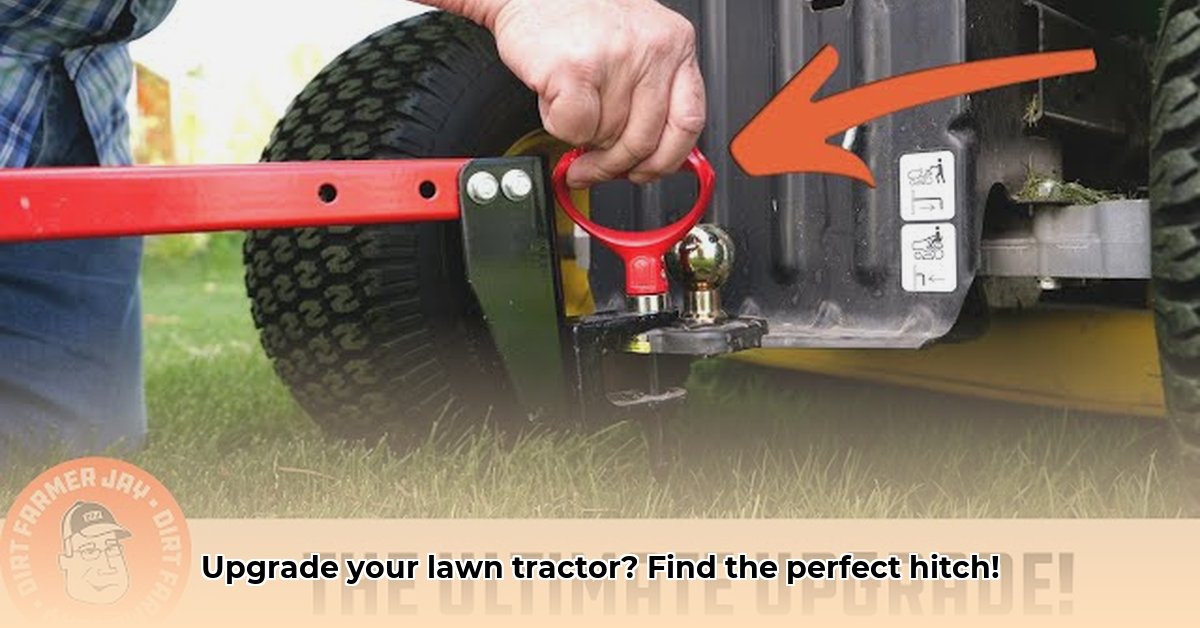
Choosing the Right Hitch for Your Lawn Tractor
Adding a hitch to your lawn tractor significantly expands its capabilities, allowing you to haul everything from yard waste to building materials. However, selecting the appropriate hitch requires careful consideration. Before purchasing, assess your needs and your tractor's limitations. What will you primarily haul? Knowing this will help determine the necessary hitch type and weight capacity. For more specialized hitches, check out this helpful guide.
Key Considerations:
Your Tractor's Weight Capacity: Consult your lawn tractor's owner's manual to determine its maximum towing capacity. Exceeding this limit is dangerous and can cause serious damage to your tractor. This information is usually expressed in pounds or kilograms. Don't risk serious damage – check your manual!
Types of Hitches: Several hitch types cater to diverse needs. Ball mount hitches are simple and suitable for light loads (e.g., leaves, small debris). Pintle hitches offer superior strength for heavier loads and uneven terrain. Specialized hitches exist for specific tasks (e.g., carrying a spreader). Understanding these differences is crucial for safe and effective operation.
Hitch Compatibility: Verify that the chosen hitch is compatible with your specific lawn tractor model. The receiver hitch on your tractor must precisely match the hitch you select. Improper fitting can lead to instability and potential accidents. Precise measurements are essential.
Here's a comparison of common hitch types:
| Hitch Type | Pros | Cons | Ideal Uses |
|---|---|---|---|
| Ball Mount Hitch | Simple, widely available, easy to install and use. | Lower weight capacity, less stable for heavy loads. | Light hauling – leaves, small garden debris. |
| Pintle Hitch | Strong, secure, suitable for heavier, uneven loads. | More complex installation, might require more expertise. | Heavy loads, uneven terrain, larger trailers. |
| Specialized Hitches | Designed for specific tasks (e.g., carrying a spreader). | Can be more expensive, less common. | Specific applications, such as fertilizer spreading. |
Installing Your Lawn Tractor Hitch: A Step-by-Step Guide
Safe installation is paramount. Always prioritize safety!
Steps:
Safety First!: Turn off your lawn tractor and engage the parking brake. Disconnect the power take-off (PTO) if applicable. Never compromise on safety.
Precise Alignment: Carefully align the hitch with your tractor's receiver. Forcing the hitch can damage both components. Take your time – accuracy prevents damage.
Secure Fastening: Use the bolts provided with your hitch. Tighten securely, but avoid over-tightening, which can strip threads or damage parts. Proper tightening is key to stability.
Thorough Testing: Before using the hitch with a heavy load, test its stability and ensure it's securely attached. A slight wiggle indicates a potential problem.
Safe Hitch Usage: Essential Tips and Practices
Safe operation involves more than just proper installation.
Even Weight Distribution: Distribute weight evenly on the trailer to prevent tipping. Heavier items should be centrally positioned. Balancing the load is crucial for stability.
Maintain a Moderate Speed: Avoid high speeds, especially when turning. Reduce speed for better control and safety. Slow and steady wins the race – especially with a trailer.
Smooth Turning: When turning, execute wider turns than usual to prevent trailer sway. Controlled turns minimize the risk of accidents.
Troubleshooting Common Hitch Problems
Despite careful installation and use, problems can arise.
Hitch Attachment Difficulties: Double-check alignment, ensuring all bolts and pins are correctly seated and tightened. Minor misalignment can cause significant issues.
Excessive Trailer Sway: Verify weight distribution and reduce speed. Wider turns can also help mitigate sway.
Damaged Hitch Components: Replace any bent or broken parts immediately. Using a damaged hitch is extremely hazardous.
Remember, always consult your lawn tractor and trailer manuals for specific instructions and safety guidelines. Regular inspection is vital for identifying potential problems early on. When in doubt, seek professional assistance.
Selecting the Right Hitch: A Summary Guide
| Feature | Considerations |
|---|---|
| Tractor Model | Ensure compatibility; consult your owner's manual |
| Hitch Type | Rear for hauling; front for snow removal or specialized implements |
| Weight Capacity | Significantly exceed anticipated weight of load and hitch |
| Material | Steel (heavy-duty); Aluminum (lighter) |
| Safety Features | Locking pins and safety chains are paramount |
Remember, safety should always be your top priority when using a lawn tractor hitch. Proper selection, installation and operation will ensure years of safe and productive use.